Many students walk into school carrying more than books, assignments, and backpacks. Some carry anxiety. Some carry loneliness. Some carry instability at home, uncertainty about the future, or a quiet belief that their current struggles define who they are. Teachers may not always see the full weight students bring with them, but they often feel the effects in the classroom.
For Christian educators, this creates a meaningful responsibility. The classroom is not only a place for instruction. It can also be a place where students encounter steadiness, encouragement, character, and hope through the faithful example of adults who care. Public schools still need educators who understand that students are not problems to manage, but young people to guide, support, and strengthen.
Students Need More Than Information
Academic instruction matters. Students need to learn math, reading, science, history, writing, and the skills that prepare them for life. But education is never only about information. Students are also learning how to persevere, how to handle frustration, how to respect others, how to recover from failure, and how to believe that growth is possible.
A teacher who only delivers content may help a student pass a test. A teacher who leads with character may help a student face life with courage.
Christian educators understand that every student is made in the image of God. That belief changes the way a teacher sees the child who struggles, the student who acts out, the young person who seems withdrawn, and the one who hides insecurity behind humor or defiance.
Romans 15:13 says, “Now the God of hope fill you with all joy and peace in believing, that ye may abound in hope.” Hope is not shallow optimism. It is the steady confidence that hardship does not have the final word. Students need adults who can reflect that kind of hope in the way they teach, correct, encourage, and lead.
The Quiet Power of Christian Influence
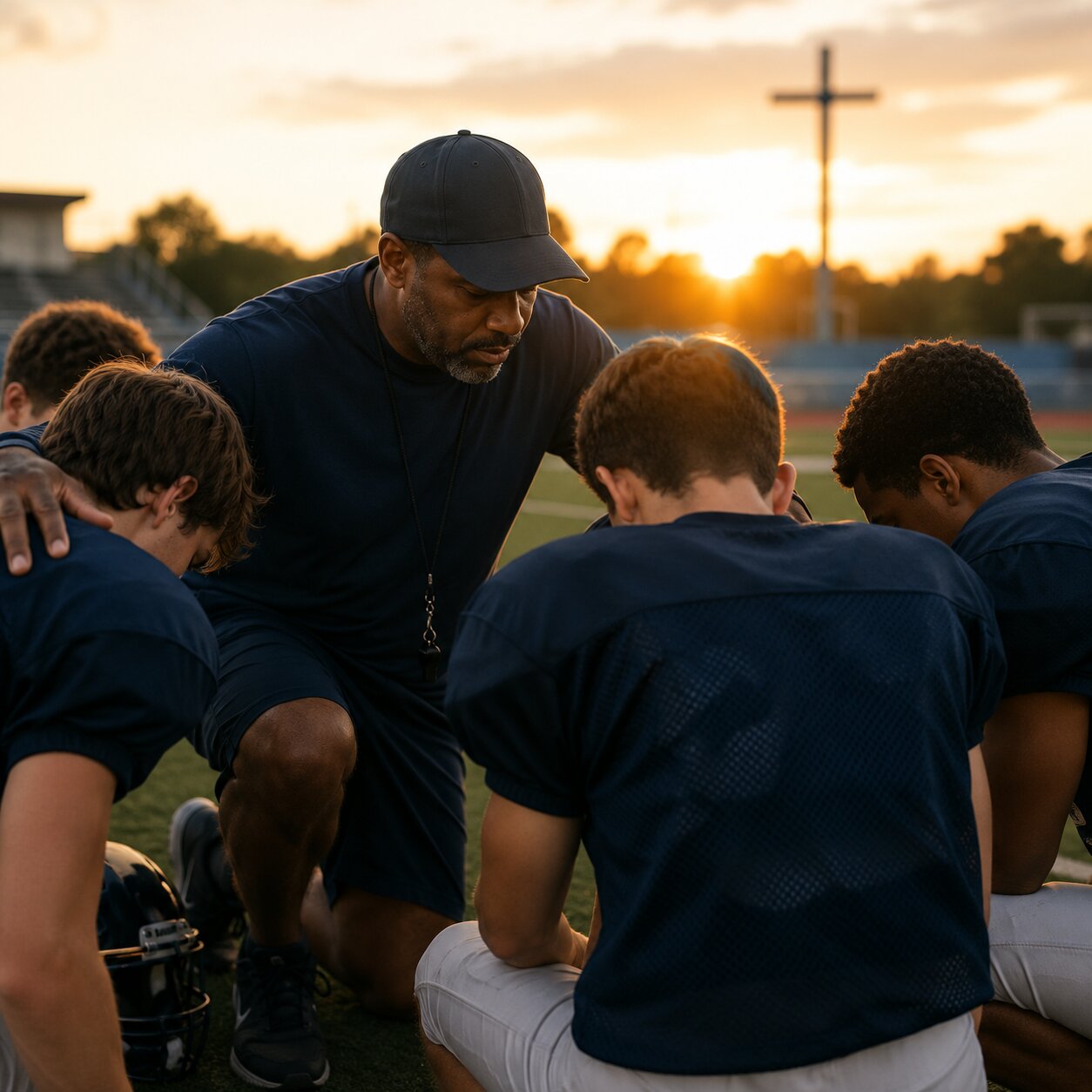
Christian influence in education does not always begin with words. Often, it begins with presence. It is seen in the teacher who remains patient when the room is difficult. It is seen in the coach who corrects without humiliating. It is seen in the educator who notices the quiet student, encourages the discouraged student, and holds every student to a higher standard because they believe growth is possible.
Faith can be modeled through daily conduct. A Christian teacher can show compassion without abandoning expectations. A Christian coach can push students toward excellence without treating them harshly. A Christian administrator can lead with truth and fairness. A Christian school employee can bring light into ordinary moments by serving with humility and care.
Matthew 5:14 says, “Ye are the light of the world. A city that is set on an hill cannot be hid.” In schools, that light may appear through kindness, wisdom, patience, consistency, and courage. Students may not always know how to name what they are seeing, but they can recognize when an adult is steady, sincere, and trustworthy.
Hope in a Culture of Anxiety
Many students today live under constant pressure. They face academic expectations, social pressure, online comparison, family struggles, cultural confusion, and fear about the future. Some students have strong support at home, while others are looking for stability wherever they can find it.
This does not mean educators should try to replace parents or take on roles that do not belong to them. Healthy boundaries still matter. But within those boundaries, educators can offer something powerful: a consistent example of calm, care, and moral clarity.
Students benefit when adults refuse to panic with the culture. They benefit when teachers model self-control. They benefit when coaches teach discipline. They benefit when educators remind them that one failure does not define them, one hard season does not end their story, and one bad decision does not remove their value.
Christian educators can help students understand that they are not beyond hope. They can do this through encouragement, correction, prayer, professionalism, and the steady witness of a life rooted in faith.
Public Schools Still Need Faithful Educators
There is sometimes a temptation for Christian educators to withdraw from public education altogether. The challenges can feel heavy. Cultural pressure can feel intense. Policies, expectations, and public conversations around education may cause faithful teachers to wonder whether their presence still matters.
It does.
Public schools need Christian educators who can serve with wisdom, professionalism, and courage. They need teachers who care about academics and character. They need coaches who lead with discipline and compassion. They need staff members who treat students with dignity. They need adults who can be trusted to serve students well without surrendering conviction.
Jeremiah 29:7 encourages God’s people to seek the welfare of the place where they have been sent. For many Christian educators, the school is part of that mission field of service. Not a place to force belief, but a place to live faithfully. Not a place to create conflict, but a place to bring steadiness, truth, and hope.
Faithful educators can make a difference precisely because they are present.
Practical Ways Educators Can Restore Hope
Hope is built through repeated, faithful actions. It is not always dramatic. Often, it grows through small moments that tell a student, “You matter. You can grow. You are not forgotten.”
Christian educators can help restore hope by:
- Greeting students with consistency and respect.
- Noticing when a student seems discouraged or withdrawn.
- Correcting behavior with dignity instead of anger.
- Holding students accountable while still believing in their potential.
- Encouraging effort, responsibility, and perseverance.
- Creating a classroom culture where students feel safe to learn.
- Communicating with parents honestly and respectfully.
- Praying privately for wisdom, patience, and protection over students.
- Modeling calmness in stressful moments.
- Reminding students through action that their future is not limited to their current struggle.
These practices may seem simple, but they matter. Students often remember the adults who made them feel seen, challenged, and valued.
Character Gives Hope a Foundation
Hope without character can become wishful thinking. True hope is strengthened by discipline, responsibility, truth, and perseverance. Christian educators can help students understand that their choices matter, their habits matter, and their character matters.
A student who learns perseverance is better prepared for hardship. A student who learns responsibility is better prepared for opportunity. A student who learns honesty is better prepared for trust. A student who learns respect is better prepared for community.
Character formation is not separate from education. It is part of preparing students for life.
Christian educators have an opportunity to teach character through example. They can show students what humility looks like. They can show them how to apologize. They can show them how to work hard, speak truth, and treat others with dignity. In a confused and anxious culture, that kind of example can become a lifeline.
Conclusion
Students need hope. They need adults who believe their lives have value, their choices matter, and their future is not finished. They need teachers, coaches, and school leaders who are willing to serve with patience, character, courage, and love.
Christian educators have a unique opportunity to bring steady influence into the lives of students. They do not have to force belief to be faithful. They can model faith through compassion, integrity, professionalism, and consistency. They can help create classrooms where students are taught well, treated with dignity, and reminded that growth is possible.
Public schools still need faithful Christian educators. They need men and women who will stand with wisdom, serve with humility, and help students find hope in the middle of pressure and uncertainty.
For more conversations on faith, education, leadership, and student-focused values, watch Bold in Belief on YouTube:
https://www.youtube.com/@ChristianPatriotEducators